Think Like CJ

Writing Without Lines

About My Blog

I’m CJ. I write about discipline, endurance, grief, and becoming who you are through repetition, not perfection.

  • May is ALS Awareness Month. An estimated 30,000 Americans are living with ALS right now, and we still don’t know why. What we do know is what it takes — slowly, and without mercy. My grandma was diagnosed in 2004. She passed on April 10, 2007. This is for her.
    “I didn’t view my body as broken, I reasoned that a human being can never be broken. Technology is broken. Technology is inadequate.” -Hugh Herr

    The Christmas tree took up nearly half the living room, its branches brushing against you as you walked by, like it needed you to notice it. We put it up weeks before Christmas every year, always together, always the same routine. It was one of those traditions that never had to be discussed, it just happened.

    A stuffed Rudolph sat somewhere near the bottom, tucked between presents or propped against the wall. Every time someone walked past, it would start to sing, Rudolph the Red-Nosed Reindeer, had a very shiny nose…

    The song played so often it blended into everything else. It became part of the background — laughter, footsteps, wrapping paper, voices overlapping. At the time, it felt like it would always sound that way.

    It used to be such a happy time.

    On Christmas evening, we gathered for dinner before moving into the living room, where presents covered the floor so completely you had to step carefully just to cross it. My grandma would sit nearby, watching everything, ready to call someone out if they even joked about opening gifts early. She had that kind of presence — firm, playful, alive. I always stayed close, helping Papaw pass out presents, feeling like I had some small but important role in the whole thing.

    I didn’t know those moments were already becoming something I would miss.

    When things started to change, it didn’t feel like anything serious. It felt small. A kink in her neck. Something stiff. Something temporary.

    Three years before she passed, she couldn’t hold her head up.

    I wasn’t worried. I was a kid. To me, it was the kind of thing that happened when you slept wrong or pushed yourself too hard. Something you laughed off and waited out. I didn’t understand that something was already beginning, something none of us could stop.

    She waited a month before going to the doctor. That was who she was — stubborn, independent, not one to make a big deal out of anything. When she finally went, they told her it was arthritis. They gave her a shot and sent her home.

    Nothing changed.

    Months passed, and her neck didn’t get better. It got worse. Then her voice started to shift. At the time, I didn’t have the words for it. I would have said it sounded robotic, maybe strained. Now I know it was something else entirely. It was fragile, like every word had to fight its way out.

    She went from doctor to doctor after that. One said arthritis. Another said stroke. Each appointment came with a new guess, a new explanation, and still no real answers. Just more waiting. More uncertainty.

    By the time her voice became difficult to understand, I started avoiding her calls. I didn’t want to ask her to repeat herself over and over. I didn’t want to sit in that discomfort.

    Now, that’s one of the things I wish I could undo the most.

    Eventually, she was sent to a neurologist. There were more tests, more scans, more waiting. When the results came back, they told my grandpa she had suffered a stroke.

    For twelve hours, that was the truth we lived in.

    Then it changed.

    It wasn’t a stroke.

    It was Amyotrophic Lateral Sclerosis.

    I didn’t understand what that meant. I didn’t know anything about motor neurons or progression or timelines. All I could see was what was happening right in front of me — that her body was slowly stopping, piece by piece, like the connection between her and everything around her was fading.

    By the time they had a name for it, it had already taken so much.

    She passed away on April 10, 2007. Two days after Easter.

    I remember exactly where I was when I found out. I was outside, running around the yard with my best friend and my dog, completely caught up in a game we had made up on the spot. We were laughing, chasing each other between the fire pit, the swings, the stairs to my clubhouse. It was one of those moments where nothing else existed.

    Then my mom opened the gate.

    “Carly, come inside. I need to talk to you.”

    I asked if I could stay out a little longer. Just a few more minutes. I didn’t want to stop what we were doing.

    “If you still feel like it after we talk, you can go back,” she said.

    I went inside and sat down on the black sectional, grass still on my jeans, my heart not yet aware that anything had changed.

    “Mamaw passed away this evening.”

    Her voice was steady, but her eyes weren’t. They were heavy, like they were holding something she couldn’t quite say out loud. I had seen my mom upset before, but this felt different. Quieter. Deeper.

    I didn’t cry.

    I didn’t understand.

    That would come later.

    I never went back outside that night. And in a way, I never really went back to the version of things that existed before that moment.

    After she was gone, everything shifted. Not all at once, but enough that you could feel it. My family started to drift. My parents divorced. The big gatherings became smaller, then less frequent, then something we had to plan instead of something that just happened.

    Holidays changed the most. What used to feel full, loud, crowded, overlapping — became quieter. More spaced out. More aware of what wasn’t there anymore.

    Now, years later, we still try. We gather when we can. We hold onto what’s left of those traditions, even when they feel different than they used to. Some holidays are better than others.

    Still, nothing really disappears.

    Sometimes, in the quiet moments, I can almost hear it again — the faint, tinny sound of that Rudolph singing from the corner of the room, like everything is still in its place.

    Like it always was.

  • Daily writing prompt
    What strategies do you use to cope with negative feelings?

    I don’t cope.

    I drown
    in mental discourse—
    stay distracted by hope,
    reframed by faith.

    Navigating life
    in a world full of switchbacks,

    hardly crawling out of one letdown
    before being introduced to the next,
    and then the next.

    The world
    sometimes feels like a simulation.

    Us—
    scurrying the streets,
    climbing ladders not meant for us,

    disguising ourselves so well
    even our own shadows
    couldn’t pick us out.

    Controlled by the letdowns
    and the crises of life,
    loss,
    love.

    Merciless in the moment.

    Broken later on.

    So you ask
    what strategies I use
    to cope with negative thoughts.

    I suppose
    I thread the words
    on the screen—

    a release
    only my fingertips
    can unlock.

    The page
    is the only place
    the noise makes sense.

  • Writing is weird. It is the one thing I strive for in life, and somehow it is also the thing that disappears the moment I need it most. In a world full of letdowns, it becomes a strange task to plead with words for release from realities scattered in front of me. Life sprinkles its seasoning of loss here and there, and that is usually when my writing leaves. It lives somewhere remote in my brain, boiling with inner emotion, waiting for a release that never comes.

    Loss is like that. You do not understand it until it stands in the doorway, uninvited, refusing to leave. Negative trait or not, I think about death every day. Not dramatically, not with a plan. Just a quiet rehearsal running beneath everything.

    Death scares me. The utter thought provokes me, suffocates me, dismembers my insides one organ at a time.

    Death will always win. It is the only fixed point in a world that refuses to hold still. Everything else moves. Time shifts from person to person, from moment to moment, indifferent to what we are feeling while it passes.

    It follows behind us each morning, walks beside us through meetings, through workouts, through laughter. It watches quietly as we attempt to build something lasting out of temporary matter.

    Our bodies are always leaving us. Aging is just the polite word for it. Cells die. Skin loosens. Years stack up behind us while the future quietly shortens without announcement. One minute you imagine ten years ahead. The next, those ten years are gone, and they feel like a breath you forgot to finish.

    We live as if we are accumulating something. Time. Memories. People. But the older we get, the more fluent we become in loss.

    Someone said recently that we do not control our bodies. That unsettled me. I have always believed we do. I believed discipline was power. Effort was ownership. Strength was proof.

    But bodies break. Cells mutate. Organs fail. Time moves forward whether we are ready or not.

    Maybe control was never the point. Maybe the point is learning how to live inside something that will outlast us.

    Death remains. And still, we wake up.

    Demons drag behind lost souls. The ground feels soft beneath my feet, but my body feels heavy. I leave a footprint everywhere I step. I try to be strong, but the demons corrode the inside of me.

    How do you keep going when the world weighs in, smothering you with life? How do you keep going when your insides pound against the walls of your body, demanding escape, but for the will to live they must stay intact?

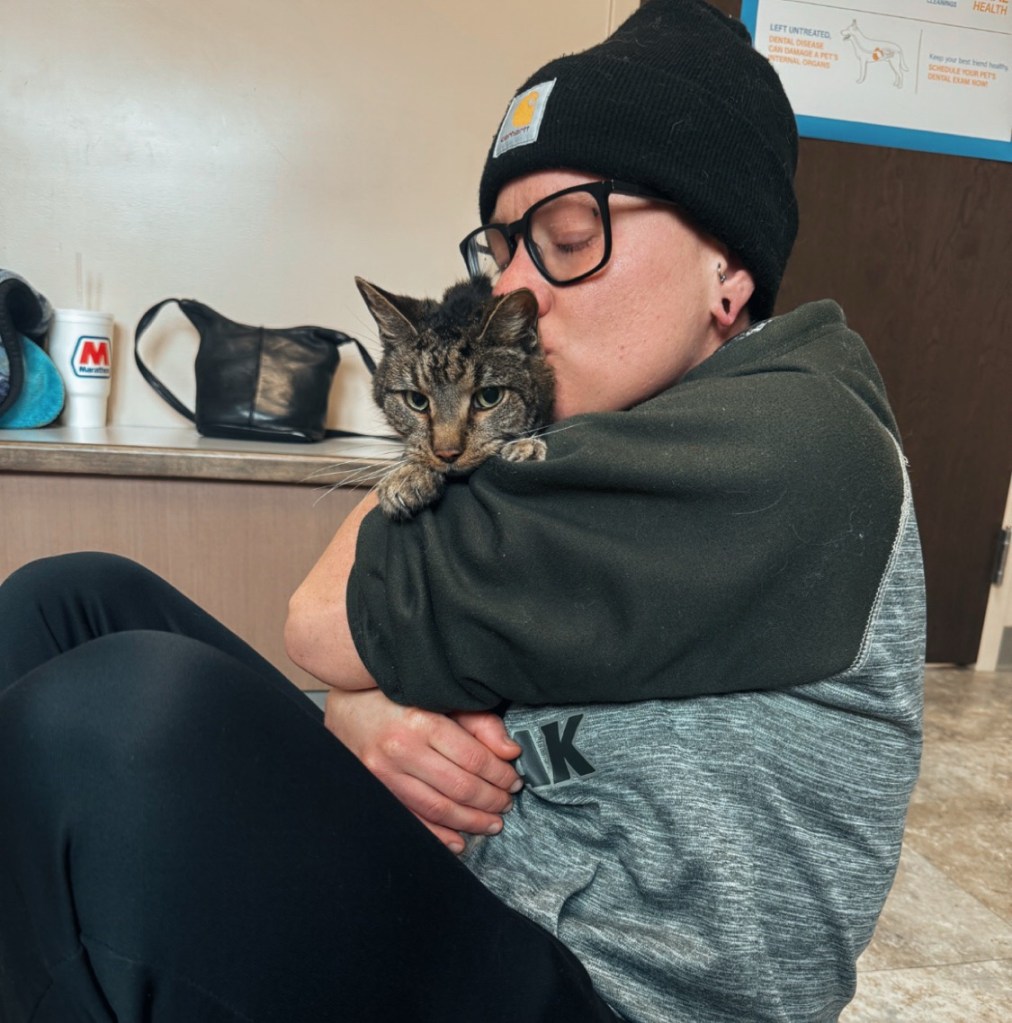
    I watched death eat my cat alive. It moved through him slowly, working its way around his body, stealing his oxygen with each exhale. Each breath grew smaller. Each moment became quieter. There was no announcement, no ceremony. Only disappearance.

    To watch breath leave the living is remarkable, not in beauty, not in wonder, but in a way that empties the room and everything inside it. Remarkably emptying.

    After it was over, the light stayed the same. The floor stayed the same. The world continued as if nothing had been taken. And that is what stayed with me. The absence. The way something can be there one moment and gone the next, and the world simply continues.

    A strong heart and a soft touch.

    And still, the breath keeps leaving us.

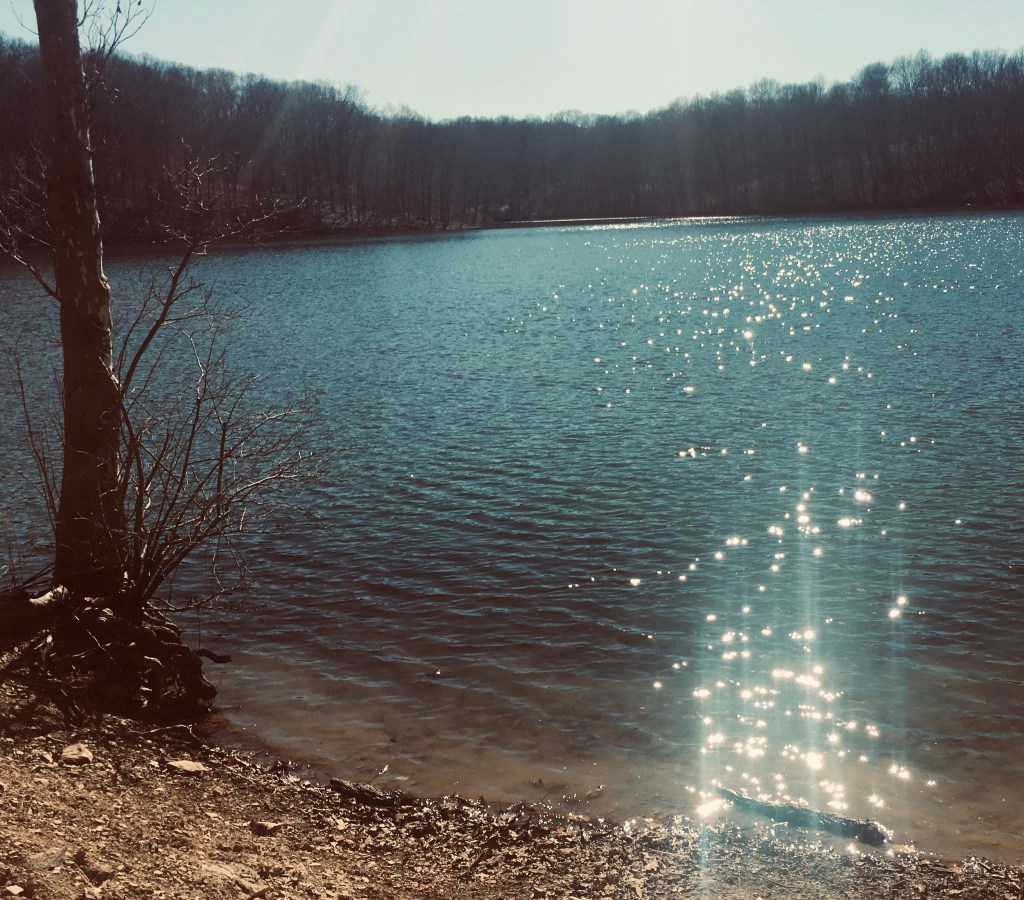
  • Griffy Lake Nature Preserve

    Complex ideas are my favorite.
    Literal puzzle pieces scattered in my brain—
    rigid and out of order, yet notably
    assembled in depth.

    The art of being whelmed.

    To love and to lose,
    both carrying the same weight.
    Engulfed by both,
    engaged through loss and fulfillment.

    Pulled by the whelm of life,
    forced to engage
    while wishing for peace.

    Seeking connection,
    contracting a virus instead.

    Negativity in its truest form—
    naive minds, saturated bodies.

    The foundation plucks along seamlessly,
    while faces age,
    wrinkles invade.

    What is left to show
    for the boundlessness
    of our being?

    Whelmed by life,
    by loss,
    by forgiveness.

    Whelmed by love.

    Whelmed by depression
    and mental disaster.

    Whelmed by the enemy.

    Whelmed is consuming—
    an unconscious, constant repetition
    in the minds of the living.

  • The problem with New Year’s resolutions is that we hold ourselves accountable to indescribably huge standards—standards we weren’t even considering a day before, but that are suddenly put into play without trial and error, without reflection, without grace.

    We’re good at dreaming.

    Dreaming is a way to displace yourself.

    A way to finagle the workings of the world a little.

    A way to tidy up the details—at least in illustration.

    But at the first blink of discomfort, the slightest grimace of pain, we run.

    We quit.

    We decide we’ve failed.

    In one day, we forget that we still have the next 364 as resources. We forget that even though life is unpredictable, it’s okay—necessary, even—to step into volcanic confusion.

    It’s the middle that gets us out alive anyway.

    So what really changes when the clock counts down to midnight and the date flips to 01/01, a new year trailing neatly behind it?

    What changes?

    Is it the euphoria?

    The belief that one single day can redirect an entire life without interruption?

    Or is it stubbornness—knowing we won’t get it right the first time, yet still giving in at the very first sign of upset?

    Do we ever truly surpass our resolutions?

    Or are resolutions imaginary—made-up figurines we dramatize in our heads to fit the world’s idealistic expectations?

    On New Year’s Eve, what do you think about?

    The resolutions you tackled and overcame—or the failures, and the constant revisions of goals you spent an entire year painting instead of chasing?

  • Part of a daily blog publishing challenge.

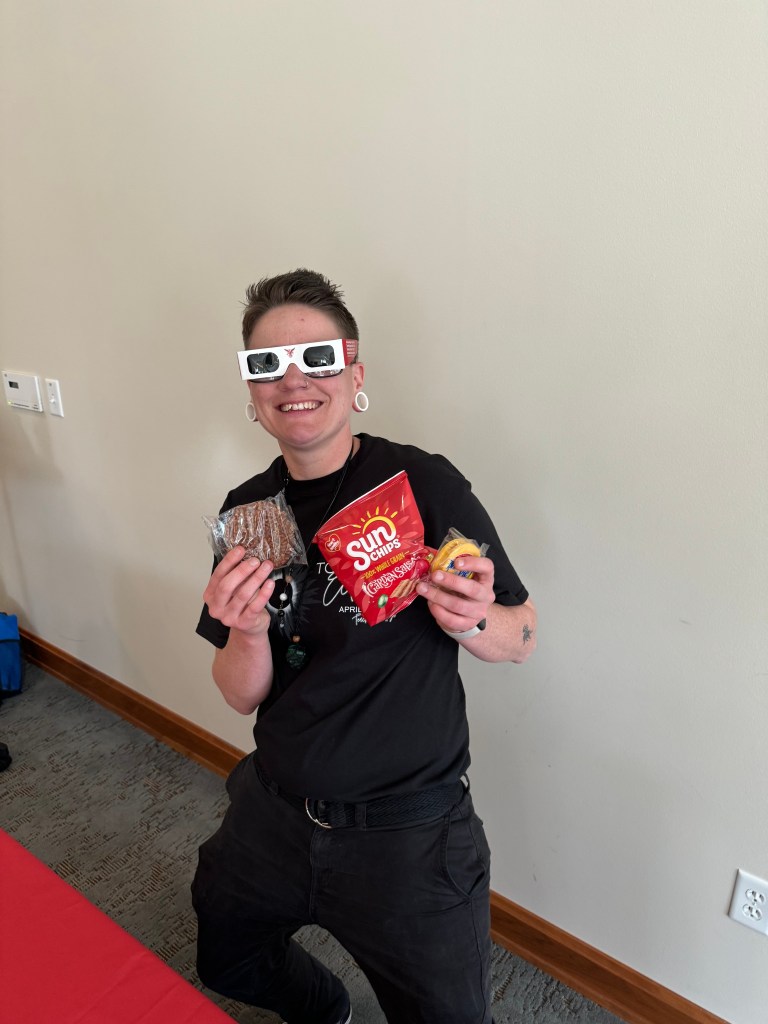
    Ball State University · April 8, 2024 · 3:09 PM

    I stopped drinking alcohol completely on April 8, 2024.
    Coincidentally, it was also the day of the Full Solar Eclipse.

    The timing feels symbolic now, but at the time, it was just the next day.

    The day before my “booze-free” count officially began, I was obliterated in my living room. I was pleading via text for release. Thirteen hours followed. Thirteen hours of vomiting up my insides. Thirteen hours of my body rejecting what my mind kept returning to.

    By the time I started counting days, my body had already made the decision.

    I’d call it cold turkey, but that wouldn’t be entirely honest.
    It was a gradual process to cold turkey — a long unraveling that finally snapped.

    The Case

    Alcohol used to be how I engaged with people.

    It was how I loosened up.
    How I accessed my extroverted, outgoing self, or at least the version of me I thought was real. Alcohol felt like identity. Like proof. Like permission.

    In reality, it was a comfort zone I didn’t know how to step outside of yet.

    When I quit, nothing miraculous happened right away.
    There was no instant clarity. No sudden peace. No personality rewrite.

    What changed came later.

    Observations

    Months without drinking revealed something I didn’t expect: my will to endure.

    I grew stronger mentally, physically, and emotionally. It was not because life got easier. It happened because I learned how to stay focused through discomfort instead of escaping it.

    That said, I won’t romanticize sobriety.

    The FOMO is real. And I think it always will be.

    It’s a virus that sneaks in when loneliness taps you on the shoulder. A nudge that tries to pull you back into the noise. Living without alcohol does get easier. But, I think a part of you will always miss it in some way. Not the damage. The familiarity.

    One of the quietest changes surprised me the most.

    After quitting, consistency in the gym came naturally. My body began craving something healthy. Not out of punishment, but out of respect. Watching that shift happen without forcing it was one of the clearest signals that something deeper had changed.

    My Opinion

    What people misunderstand about alcohol is this: everyone’s story is different.

    One man wakes up and drinks from sunup to sundown.
    One woman wakes up and sips her coffee. She hits the gym. She winds down with a couple bottles of wine every night.

    Same substance. Entirely different narratives.

    Quitting alcohol didn’t give me a new life.
    It gave me the strength to love the life I’ve been given.

    I don’t believe alcohol is always the problem. I believe it’s often the cover — the thing shielding the story someone isn’t ready to read yet.

    Who This Is For

    This isn’t for people who think they have a problem.
    It’s for people who want to make a change in the way they’re living.

    That’s it. No labels required.

  • Daily writing prompt
    List your top 5 grocery store items.

    My grocery list has acquired the same growth mindset I have, over the years.

    The cart was once overflowing with frozen dinners, Oreos, cereal, and processed meats. Now it fills with things that entice the mind, body, and spirit. Here’s a glimpse into my kitchen.

    Greek yogurt—Chobani or Oikos, to be exact.
    Chobani for creative desires and creamy goodness.
    Oikos when I’m feeling disciplined and structured, for the routine mind.
    Both offer a gentle sensation. Add honey and it twists your toes just enough to feel alive.

    Old Fashioned Oats—or Kodiak Protein Oats when I’m not balling on a budget.
    Old Fashioned because they’re bigger in diameter and don’t sog as quickly. Perfect for overnight oats.
    A teaspoon of light brown sugar satisfies the taste. A drizzle of honey does the rest when sugar cravings start to clutter my mind.

    Bananas.
    More green than yellow—but never overpowering. Just subtly dominant.
    For grab-and-go mornings. Days. Nights.

    Boneless chicken breasts.
    Lean. Juicy. Filling.
    The essential grab.

    Brown rice.
    When money for food was scarce and the fridge felt like a dessert—
    I learned rice is a firm foundation in a kitchen, unwavering in love.

    Apparently, I don’t know how to make a list without turning it into prose.

  • To be yourself in a world that is constantly trying to make you something else is the greatest accomplishment.

    Ralph Waldo Emerson

    I’m learning that success often looks like authenticity, even when it costs approval.

  • Today’s blog challenge is to publish a poll or survey.

    I don’t have a loud audience yet — most days, it feels like I’m writing into a quiet room. Still, I’m learning that growth doesn’t start with answers. It starts with asking.

    So if you’re here, this is me inviting you in.

    Thank you for being here, even quietly.

  • Letting go of the need to explain isn’t isolation, it’s discernment. What truly matters doesn’t demand justification. What’s understood authentically speaks for itself.

    1. My reactions to people’s words
    People will perceive me however they want. It’s not my job to teach someone how to see me.

    2. My gym routine
    It took me years to commit to the gym. I hold it dear because I know how easily it can be disrupted.

    3. My past
    Nobody needs to forgive me except myself.

    4. My faith
    My faith doesn’t need to make sense to anyone but me.

    5. My political views
    I don’t owe anyone access to my political beliefs.

    6. My mental health
    I advocate for my mental health because I refuse to disappear quietly.

    7. My mom
    My relationship with my mamma is sacred.

    8. Overthinking
    It isn’t weakness. Its awareness stretched thin. Vigilance that forgot how to rest.

    9. Fitness advice
    I keep fitness advice quiet unless it’s invited.

    10. My aspirations
    Some goals are protected by silence until they’re ready to exist out loud.

    11. Personal connections
    I no longer apologize for wanting depth, effort, and consistency.

    12. My pain
    My pain is not a lesson plan for others.

    Understanding is a gift — not a necessity.