Think Like CJ

Writing Without Lines

About My Blog

I’m CJ. I write about discipline, endurance, grief, and becoming who you are through repetition, not perfection.

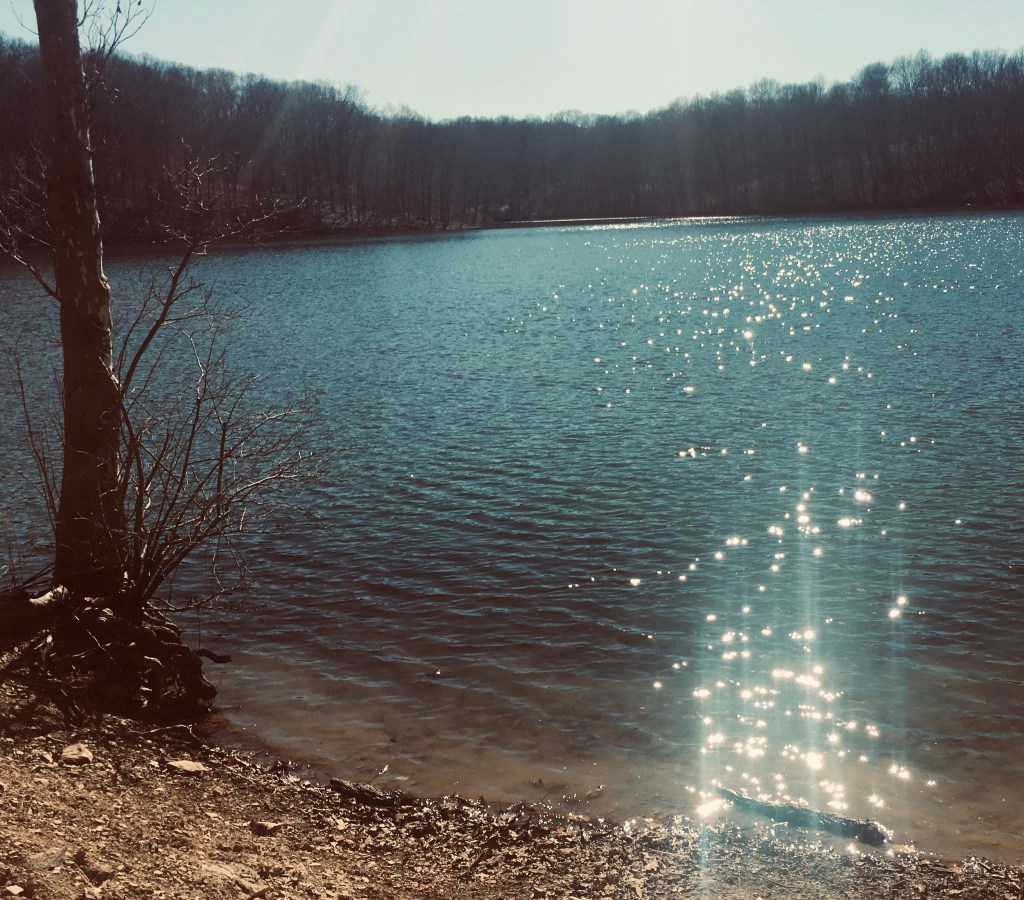
  • Griffy Lake Nature Preserve

    Complex ideas are my favorite.
    Literal puzzle pieces scattered in my brain—
    rigid and out of order, yet notably
    assembled in depth.

    The art of being whelmed.

    To love and to lose,
    both carrying the same weight.
    Engulfed by both,
    engaged through loss and fulfillment.

    Pulled by the whelm of life,
    forced to engage
    while wishing for peace.

    Seeking connection,
    contracting a virus instead.

    Negativity in its truest form—
    naive minds, saturated bodies.

    The foundation plucks along seamlessly,
    while faces age,
    wrinkles invade.

    What is left to show
    for the boundlessness
    of our being?

    Whelmed by life,
    by loss,
    by forgiveness.

    Whelmed by love.

    Whelmed by depression
    and mental disaster.

    Whelmed by the enemy.

    Whelmed is consuming—
    an unconscious, constant repetition
    in the minds of the living.

  • The problem with New Year’s resolutions is that we hold ourselves accountable to indescribably huge standards—standards we weren’t even considering a day before, but that are suddenly put into play without trial and error, without reflection, without grace.

    We’re good at dreaming.

    Dreaming is a way to displace yourself.

    A way to finagle the workings of the world a little.

    A way to tidy up the details—at least in illustration.

    But at the first blink of discomfort, the slightest grimace of pain, we run.

    We quit.

    We decide we’ve failed.

    In one day, we forget that we still have the next 364 as resources. We forget that even though life is unpredictable, it’s okay—necessary, even—to step into volcanic confusion.

    It’s the middle that gets us out alive anyway.

    So what really changes when the clock counts down to midnight and the date flips to 01/01, a new year trailing neatly behind it?

    What changes?

    Is it the euphoria?

    The belief that one single day can redirect an entire life without interruption?

    Or is it stubbornness—knowing we won’t get it right the first time, yet still giving in at the very first sign of upset?

    Do we ever truly surpass our resolutions?

    Or are resolutions imaginary—made-up figurines we dramatize in our heads to fit the world’s idealistic expectations?

    On New Year’s Eve, what do you think about?

    The resolutions you tackled and overcame—or the failures, and the constant revisions of goals you spent an entire year painting instead of chasing?

  • Part of a daily blog publishing challenge.

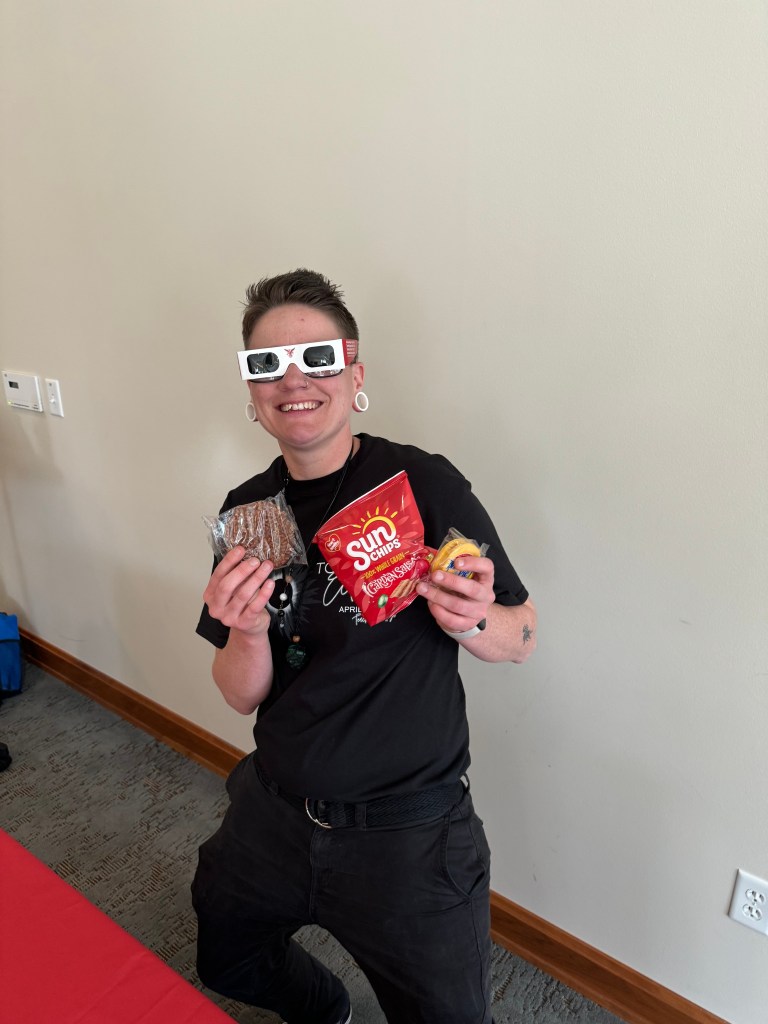
    Ball State University · April 8, 2024 · 3:09 PM

    I stopped drinking alcohol completely on April 8, 2024.
    Coincidentally, it was also the day of the Full Solar Eclipse.

    The timing feels symbolic now, but at the time, it was just the next day.

    The day before my “booze-free” count officially began, I was obliterated in my living room. I was pleading via text for release. Thirteen hours followed. Thirteen hours of vomiting up my insides. Thirteen hours of my body rejecting what my mind kept returning to.

    By the time I started counting days, my body had already made the decision.

    I’d call it cold turkey, but that wouldn’t be entirely honest.
    It was a gradual process to cold turkey — a long unraveling that finally snapped.

    The Case

    Alcohol used to be how I engaged with people.

    It was how I loosened up.
    How I accessed my extroverted, outgoing self, or at least the version of me I thought was real. Alcohol felt like identity. Like proof. Like permission.

    In reality, it was a comfort zone I didn’t know how to step outside of yet.

    When I quit, nothing miraculous happened right away.
    There was no instant clarity. No sudden peace. No personality rewrite.

    What changed came later.

    Observations

    Months without drinking revealed something I didn’t expect: my will to endure.

    I grew stronger mentally, physically, and emotionally. It was not because life got easier. It happened because I learned how to stay focused through discomfort instead of escaping it.

    That said, I won’t romanticize sobriety.

    The FOMO is real. And I think it always will be.

    It’s a virus that sneaks in when loneliness taps you on the shoulder. A nudge that tries to pull you back into the noise. Living without alcohol does get easier. But, I think a part of you will always miss it in some way. Not the damage. The familiarity.

    One of the quietest changes surprised me the most.

    After quitting, consistency in the gym came naturally. My body began craving something healthy. Not out of punishment, but out of respect. Watching that shift happen without forcing it was one of the clearest signals that something deeper had changed.

    My Opinion

    What people misunderstand about alcohol is this: everyone’s story is different.

    One man wakes up and drinks from sunup to sundown.
    One woman wakes up and sips her coffee. She hits the gym. She winds down with a couple bottles of wine every night.

    Same substance. Entirely different narratives.

    Quitting alcohol didn’t give me a new life.
    It gave me the strength to love the life I’ve been given.

    I don’t believe alcohol is always the problem. I believe it’s often the cover — the thing shielding the story someone isn’t ready to read yet.

    Who This Is For

    This isn’t for people who think they have a problem.
    It’s for people who want to make a change in the way they’re living.

    That’s it. No labels required.

  • Daily writing prompt
    List your top 5 grocery store items.

    My grocery list has acquired the same growth mindset I have, over the years.

    The cart was once overflowing with frozen dinners, Oreos, cereal, and processed meats. Now it fills with things that entice the mind, body, and spirit. Here’s a glimpse into my kitchen.

    Greek yogurt—Chobani or Oikos, to be exact.
    Chobani for creative desires and creamy goodness.
    Oikos when I’m feeling disciplined and structured, for the routine mind.
    Both offer a gentle sensation. Add honey and it twists your toes just enough to feel alive.

    Old Fashioned Oats—or Kodiak Protein Oats when I’m not balling on a budget.
    Old Fashioned because they’re bigger in diameter and don’t sog as quickly. Perfect for overnight oats.
    A teaspoon of light brown sugar satisfies the taste. A drizzle of honey does the rest when sugar cravings start to clutter my mind.

    Bananas.
    More green than yellow—but never overpowering. Just subtly dominant.
    For grab-and-go mornings. Days. Nights.

    Boneless chicken breasts.
    Lean. Juicy. Filling.
    The essential grab.

    Brown rice.
    When money for food was scarce and the fridge felt like a dessert—
    I learned rice is a firm foundation in a kitchen, unwavering in love.

    Apparently, I don’t know how to make a list without turning it into prose.

  • To be yourself in a world that is constantly trying to make you something else is the greatest accomplishment.

    Ralph Waldo Emerson

    I’m learning that success often looks like authenticity, even when it costs approval.

  • Today’s blog challenge is to publish a poll or survey.

    I don’t have a loud audience yet — most days, it feels like I’m writing into a quiet room. Still, I’m learning that growth doesn’t start with answers. It starts with asking.

    So if you’re here, this is me inviting you in.

    Thank you for being here, even quietly.

  • Letting go of the need to explain isn’t isolation, it’s discernment. What truly matters doesn’t demand justification. What’s understood authentically speaks for itself.

    1. My reactions to people’s words
    People will perceive me however they want. It’s not my job to teach someone how to see me.

    2. My gym routine
    It took me years to commit to the gym. I hold it dear because I know how easily it can be disrupted.

    3. My past
    Nobody needs to forgive me except myself.

    4. My faith
    My faith doesn’t need to make sense to anyone but me.

    5. My political views
    I don’t owe anyone access to my political beliefs.

    6. My mental health
    I advocate for my mental health because I refuse to disappear quietly.

    7. My mom
    My relationship with my mamma is sacred.

    8. Overthinking
    It isn’t weakness. Its awareness stretched thin. Vigilance that forgot how to rest.

    9. Fitness advice
    I keep fitness advice quiet unless it’s invited.

    10. My aspirations
    Some goals are protected by silence until they’re ready to exist out loud.

    11. Personal connections
    I no longer apologize for wanting depth, effort, and consistency.

    12. My pain
    My pain is not a lesson plan for others.

    Understanding is a gift — not a necessity.

  • Reinvention is the action or process through which something is changed so much that it appears entirely new. People hear that definition and imagine fireworks, a dramatic before and after, a fresh start wrapped in momentum. But reinvention, in reality, is much quieter than that.

    When most people say they want to reinvent themselves, I don’t think they are looking for a new life. I think they are looking for personal freedom. They want hobbies again, peace again, and mental safety inside their own skin. They are craving sanity, tranquility, and a version of themselves that feels like home instead of a battlefield.

    For me, reinvention starts with excitement and hope. Then comes the dread, not the fear of becoming someone new, but the fear of the discipline it requires. Reinvention is not a mood or a burst of inspiration. It is the daily willingness to do the unglamorous things that actually change you.

    It goes without saying that reinvention is deeply misunderstood.

    For so long, I believed reinvention meant dropping what was and creating something entirely new. Planting fresh seeds before burning the old crops. Starting something before finishing what I left behind. I thought I was not where I wanted to be because of the world around me. I believed my circumstances, my people, and my past were solely responsible for my stagnation.

    It was never me — or so I told myself.

    But my most honest reinvention happened during one of the darkest seasons of my life. The first small habit that moved me forward was quitting drinking. It was not dramatic. It was not glamorous. It was a quiet choice that felt heavy at first but eventually became the foundation I needed.

    Reinvention is not waking up, going to work, and repeating life on autopilot. It is waking up, working, and staying true to your goals even when comfort whispers otherwise. It is coming home and choosing the thing you said you wanted, the run, the writing, the gym, the meal prep, instead of kicking your feet up and surrendering to complacency.

    It is changing the way you eat.
    The way you move.
    The way you interact.
    The way you see the world.

    I am a writer, but for years writing made me want to vomit. I hid from my own voice for so long that returning to it felt like learning a new language. Reinvention required facing the parts of myself I had abandoned and the parts I had blamed on everyone else.

    The biggest lie society sells about transformation is the idea that it has a start date and an end date. No one who has truly reinvented themselves can tell you the day they finished. Reinvention does not finish. It evolves.

    We live in a world overflowing with shortcuts. Quick fixes, how-tos, easy solutions. Influencer culture thrives on dramatic transformations and sells the illusion that change should be fast, effortless, or visible. But change is none of those things. Change is slow, inconvenient, and often invisible for months before it breathes.

    The moment I realized reinvention was lifelong was when I opened the door to depression and had to confront the truth that much of my suffering came from my own self-sabotage. That was when I understood this journey has no finish line. Reinvention is not a sprint. It is a lifelong subscription to self-awareness, emotional intelligence, reflection, and discipline.

    Now, reinvention is not cinematic for me. It is a steady accumulation of choices: thinking critically, moving my body, protecting my mental safety, paying attention to what I consume both physically and emotionally. Reinvention is infinite. It is always within reach, yet ego and insecurity often push it away.

    The hardest truth I have learned about becoming a newer version of myself is that some days are unbearably heavy. Some days you want to be anyone other than the person doing the work. But the most important realization is this:

    You are the only thing holding you back from reinvention.

    We walk through life believing we have time. Time to change. Time to research. Time to wait. But the truth is simpler. You have time. You are just not using it.

    So keep dreaming, even when the world feels foreign. Keep choosing the smallest version of the person you want to be. Reinvention is not a single moment. It is a lifetime of becoming.

    I hope someone is reminded that reinvention is not distant. It starts right now.

  • Today’s blog challenge was to write a post based on an interview I’ve taken before — so I’m sharing one that left a huge impression on me. It’s a story about grit, unexpected opportunity, deep friendship, and what it truly means to become part of the 1% who can say the words: I am an Ironman.


    What initially motivated you to sign up for the Ironman, and did that motivation evolve during your training?

    “Honestly,” he said, “I didn’t sign up by choice — not at first. I spent the summer training a young woman for her first full Ironman. We rode together, trained in the heat together, even swam together. But when she got to the start line, the Ironman swim portion was canceled due to unsafe conditions.

    Right away, she texted me asking if I could help get her into Ironman Florida. It was already sold out. I told her Louisville still had slots — but it was only two weeks away. She said she’d do it if I would do it with her. I told her I couldn’t afford it. Her response? ‘You misunderstand. I’ll pay for you to do it if you’ll do it with me.’

    So two weeks before the race, I suddenly found myself about to do my first Ironman.”

    What motivated him originally wasn’t the dream of becoming an Ironman — it was loyalty, friendship, and the desire to show up for someone who asked. But that motivation evolved into something much deeper: proving to himself that he could rise to an impossible challenge with almost no runway.

    Can you describe one of the toughest moments you faced during training, and how you pushed through it?

    “My back had been bothering me all summer. I hadn’t run more than 6 miles — and most days it was 3. With only two weeks left, I had to try to get my run mileage up. A few days before the race, I managed 7 miles. That was it.”

    He didn’t sugarcoat it. There wasn’t some grand comeback run, no miraculous 20-miler before race day. It was pain, discipline, and the belief that he could suffer through whatever was coming.

    “I was certain I would start and I would finish — barring a freak accident. I just kept reminding myself of that.”

    What part of the race tested you the most, and what did you learn from it?

    “The run. No question.”

    Despite almost no run training, he ran nearly 20 miles of the marathon — walking mostly at aid stations.

    “That showed me how hard you can push yourself when you decide there’s no quitting. I was amazed at how much I could actually run.”

    Crossing the finish line wasn’t the end of the fight.

    “When I sat in a chair afterward, I couldn’t move my right leg. Couldn’t even feel it. I was severely dehydrated, needed IV fluids and two brutal chiropractic adjustments. When I got home, I scheduled back surgery. They had to open up two nerve canals and remove part of a disc.”

    Still — he finished.
    Still — he became an Ironman that day.

    How did completing the Ironman change your understanding of your own limits?

    “I feel more confident not just in my abilities, but in who I am. There’s a lot more to an Ironman than the race. The people you meet, the friendships you build — it changes you.”

    For him, the finish line wasn’t validation of physical toughness. It was proof that the mind often underestimates what the body can survive.

    Was there a moment during the race you realized you would finish?

    “Yes. When you step onto that finish carpet… it hits you.”

    He described it the way most athletes describe sacred things — slowly, reverently.

    “The music, the crowd, your friends and family yelling your name. And then you hear it: You are an Ironman. It’s overwhelming. It’s honestly one of the greatest accomplishments of my life.”

    What does being part of the ‘1% of the world who are Ironmen’ mean to you?

    “Everyone knows the title ‘Ironman.’ Even people who don’t understand the full distance respect it. In the triathlon world, it’s the race — like the Masters in golf or the Kentucky Derby.

    Being able to say I am an Ironman means I did something extraordinary. Something not many people on Earth will ever do.”

    How has your Ironman experience influenced the rest of your life?

    He didn’t hesitate.

    “It made me braver. It changed my confidence. And it reminded me that showing up — for yourself and others — is powerful. Training with someone all summer, then crossing that finish line together emotionally, even on different courses and days… that shaped my life.”

    What advice would you give someone considering doing an Ironman?

    “Train with other people. Seriously. Companionship on the long days, accountability when you want to quit, insights from athletes who’ve already done it — that changes everything.”

    Final Thoughts

    I chose to share this interview because it captures what I love most about endurance sports:
    the way ordinary people rise into extraordinary versions of themselves.

    Ironman isn’t just a race. It’s a story — and everyone who attempts one writes a version of it that is uniquely theirs.

  • If this week had a theme, it would be clarity—not loud, not dramatic, but gentle clarity. The kind that sneaks up on you in moments you never expect to matter. Here is a memory that shaped my understanding of where I am right now.

    This week brought with it a surprising amount of positive reflection. I’d been struggling to find joy in such a fast-moving world that even the simplest moments had begun to feel heavy. But the more days that pass, the more wise I feel—at least in the sense of learning how to exist inside an unpredictable world.

    It’s becoming clearer to me that perception is the quiet ruler of everything.

    A few days ago, I met a man at the gym. A place often perceived as forbidden fruit—intimidating, surrounded by mirrors and expectation. But it keeps its promises when you let it.

    He caught me outside and asked,
    “Is it easy living life as yourself?”

    I told him the only truth I know: be authentically you, and the rest is a matter of perception.

    He paused, then shared that he’s transitioning.

    In that moment, I was reminded of how uncertain life is, how none of us really have it figured out. Yet there is freedom—something divine—about living boldly and honestly, not for anyone else, but for yourself.

    Perception is reality.
    —Lee Atwater